
Finding Gulfport Residents by Record
No single roster lists everyone in Gulfport. The strongest Gulfport search begins with what you already know. An address points to the Harrison County landroll and its parcel maps. A court matter belongs with the right division of the court. An older household belongs on the library shelf, not on a current tax card. Keep every Gulfport result tied to its date, custodian, and record key.
Those distinctions matter more than volume. A landroll names an assessed owner. A deed names legal parties to a filing. A voter tool checks a registration match. None of the three alone proves who occupies a house today. The Gulfport residents directory works best as a short, documented trail. It should never be a composite profile stitched from unlike records.
- Start with the known Gulfport address, full name, or approximate time period.
- For a Gulfport parcel question, search the county landroll and preserve the PPIN or legal description.
- Use the matching Gulfport court, voter, deed, or library source for the separate question.
- Check a second Gulfport source from a different date before treating a name match as the same person.
- When a Gulfport record is not online, ask the custodian for an identifiable record set and date range.
Gulfport Resident Records Offices
Gulfport records cross city, county, and state custody. The Chancery Clerk records land instruments and holds the historical vault. The county landroll supplies the parcel side. State and county election offices handle registration and precinct data. Each Gulfport office answers a different question. So its name belongs in every note you keep.
Harrison County Landroll
Gulfport property and assessment search
Gulfport, Mississippi
Search by owner, street, parcel, or PPIN
Mississippi Elections
Gulfport registration verification
Harrison County selection required
Circuit Clerk voter registration: 228-865-4049
Older county files may carry Mississippi City geography, since the county seat moved to Gulfport in 1902. That filing clue changes nothing about the modern custodian.
Gulfport Parcels Start With Landroll
The 2024 Harrison County landroll is the best start. Use it when a Gulfport name connects to property. The name mode wants a full last name, a space, then a first initial. The address mode is built for browsing a street. It does not pin one house number. It takes the street name only, drops directionals, and asks for at least three characters. For tighter Gulfport results, search by parcel number or PPIN instead.
| Gulfport landroll route | Gulfport entry rule | Useful Gulfport result |
|---|---|---|
| Gulfport name | Full last name plus a space and first initial is recommended | Gulfport assessed-owner starting point |
| Gulfport address | Street name only, no number or directional, three-character minimum | Gulfport street-level candidate parcels |
| Gulfport parcel number | Exact parcel identifier | Specific Gulfport property card |
| Gulfport PPIN | Property identification number | Stable Gulfport handoff to related records |
Treat the two address fields as separate facts. The situs address marks the parcel location. A mailing address is where tax notices go, and it may sit outside Gulfport or name an entity instead of a person. A landroll result can show an ownership relationship without proving anyone lives there.
- Gulfport parcel
- A defined piece of Gulfport real property used by the assessment system.
- Gulfport PPIN
- A property identifier that helps connect a Gulfport landroll result to later research.
- Gulfport situs address
- The physical location of the Gulfport property, distinct from an owner's mailing address.
- Gulfport legal description
- The lot, block, subdivision, or boundary description used in Gulfport recorded land instruments.
Gulfport Maps Add Parcel Context
Tax records read better beside map geometry. The county parcel service exposes parcel and land-roll layers. The city's St Cadastral service adds streets, address points, and parcels. The city layer is handy for seeing which address point sits on a street segment. Still, a map is a map, not a deed or resident record.
The Gulfport St Cadastral service supports identify, query, find, and export operations. Compare its address point and parcel shape against the county landroll. Record the source date before letting adjacent geometry guide a broader neighborhood question.
Note: A city GIS point locates an address. It does not verify that a named person currently lives there.
Harrison Deeds Follow Gulfport Land
Once the parcel is known, the Chancery Clerk's recorded-instrument trail is the next stop. The online index filters by official record type, book, and page. It also offers sectional-index help for the county's judicial districts. A current street string often misses an older deed. The durable key is the legal description paired with grantor and grantee names.
Search the Harrison County Virtual Index to find an instrument. Then note its type, parties, recording date, book or volume, page, and legal description. The portal offers scanned-record viewing and a purchase path. It warns that displayed images are informational. So get an official or certified copy from the clerk when it counts.
When the online trail ends, the Harrison County Records Vault keeps historical files, land rolls, and tax receipts, many dating to 1841. The Gulfport vault is currently closed to the public. So call the vault clerk before traveling. Staff can find and copy material. But they cannot offer a title opinion or legal advice.
Gulfport Precincts Require Exact Matches
Registration data serves one narrow purpose in a Gulfport residents directory. Mississippi's state verification form requires county, last name, first name, and date of birth. It also requires the last four Social Security digits. Every field must match the registration. Those sensitive inputs stay private in the public result. The tool confirms a registrant's own record; it is not a street roster.
For address-to-precinct context, the Harrison County precinct locator takes a street number and street name. Its instructions say to drop directionals and suffixes. It also suggests trying forms like 52 or 52 nd. on numbered streets. The database page carries an update timestamp of March 3, 2026. Keep that date with any precinct result, since boundaries and election data shift over time.
Gulfport Court Names Need Context
One name can surface in several Gulfport court systems. Chancery, Circuit, Municipal, and federal dockets each stand alone. A hit in one is not a hit elsewhere. Harrison Chancery's public docket searches by surname or date. A scheduled entry can list plaintiff, defendant, case number, courtroom, time, and judge. That result is a snapshot, not a full history or final disposition.
To pull an older file or a certified record, bring the division, case number, and date to the clerk. Mississippi Electronic Courts handles Circuit Court access. Gulfport Municipal Court covers citations and payments, and federal matters run through PACER. Each is its own custodian. An empty result on one portal never proves a person had no matter elsewhere. Treat a Gulfport residents directory match in court records as a lead, not a verdict.
Note: Keep the court division and search date with every Gulfport name result to avoid mixing up similar names.
Gulfport Vital Records Have Gates
Vital records in Gulfport sit behind gates an open residents directory never has. The Mississippi State Department of Health controls state birth, death, and eligible marriage access. Birth records stay closed to qualified applicants for 100 years. Death records stay closed for 50. A certified copy demands the right relationship or another qualifying route. It also requires identification and payment with the form.
Gulfport marriage coverage follows two state periods. The first runs January 1, 1926 through June 30, 1938. The second starts January 1, 1942 and runs forward. The July 1938 through December 1941 gap sits with the Harrison County Circuit Clerk. MSDH can search its divorce index. But the Chancery Clerk holds the actual decree. Those limits make a vital record a controlled confirmation rather than a general resident lookup.
Current Gulfport Resident Sources
Each Gulfport resident source records a different relationship. Say what the source actually holds. A parcel card carries tax and ownership fields. A voter tool returns a registration match. A recorded instrument names legal parties, while city GIS places a point and parcel on the map, and the table keeps those roles apart.
| Gulfport source | Relationship shown | Custodian | Access path |
|---|---|---|---|
| 2024 Official Landroll | Assessed owner, parcel, and tax fields | Harrison County | Web search by name, street, parcel, or PPIN |
| St Cadastral service | Street, address point, and parcel geometry | City of Gulfport | Public map service |
| Virtual Index | Legal parties to recorded instruments | Chancery Clerk | Sectional index, book, and page route |
| Registration and precinct tools | Registration or precinct information returned by the system | Mississippi SOS / Circuit Clerk | Exact individual check or street precinct route |
| HCLS local-history collections | Historical household or event evidence | Harrison County Library System | Catalog, request, microfilm, and in-person research |
Work a present-day name check source by source. A historical address or household trail is a different task. That path belongs on the Gulfport city directories page, where the dated collections follow their own workflow.
Gulfport Safety Searches Are Narrow
Custody, registry, and unclaimed-property tools answer narrow civic questions. Folding them into one resident file invites error. Each has a specific public purpose and changes fast. A sheriff result shows jail-docket status only. It is not a conviction or a current address. A registry entry is a statutory status that needs its own date and custodian. A state claim route exists so a person can pursue their own possible property. It is not there to prove where someone lives.
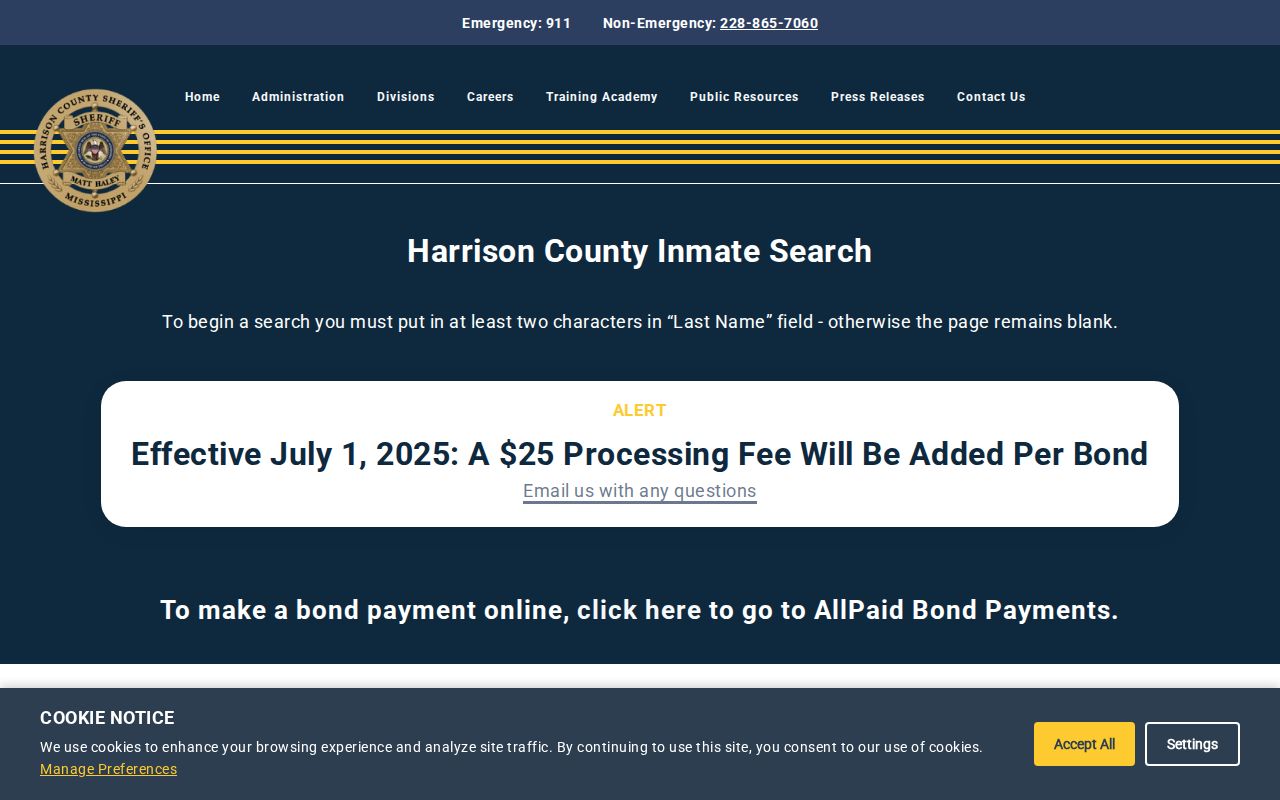
The Harrison County Sheriff inmate search is the county-custody route. The page requires at least two characters for a last-name query. The field can also be left blank. It warns that information changes quickly. That warning is exactly why a temporary detention entry should be read as a narrow Gulfport residents directory result rather than a profile.
The Mississippi Sex Offender Registry offers name, geographic, and ZIP search routes after its agreement screen. A registry result stays tied to the official service and the date searched. Treat it as a Gulfport residents directory caution, not a general lookup.

The Mississippi Treasury unclaimed-property route lays out the official search and claim steps. Its state claim page shows why a Gulfport residents directory must name the record type before any conclusion.
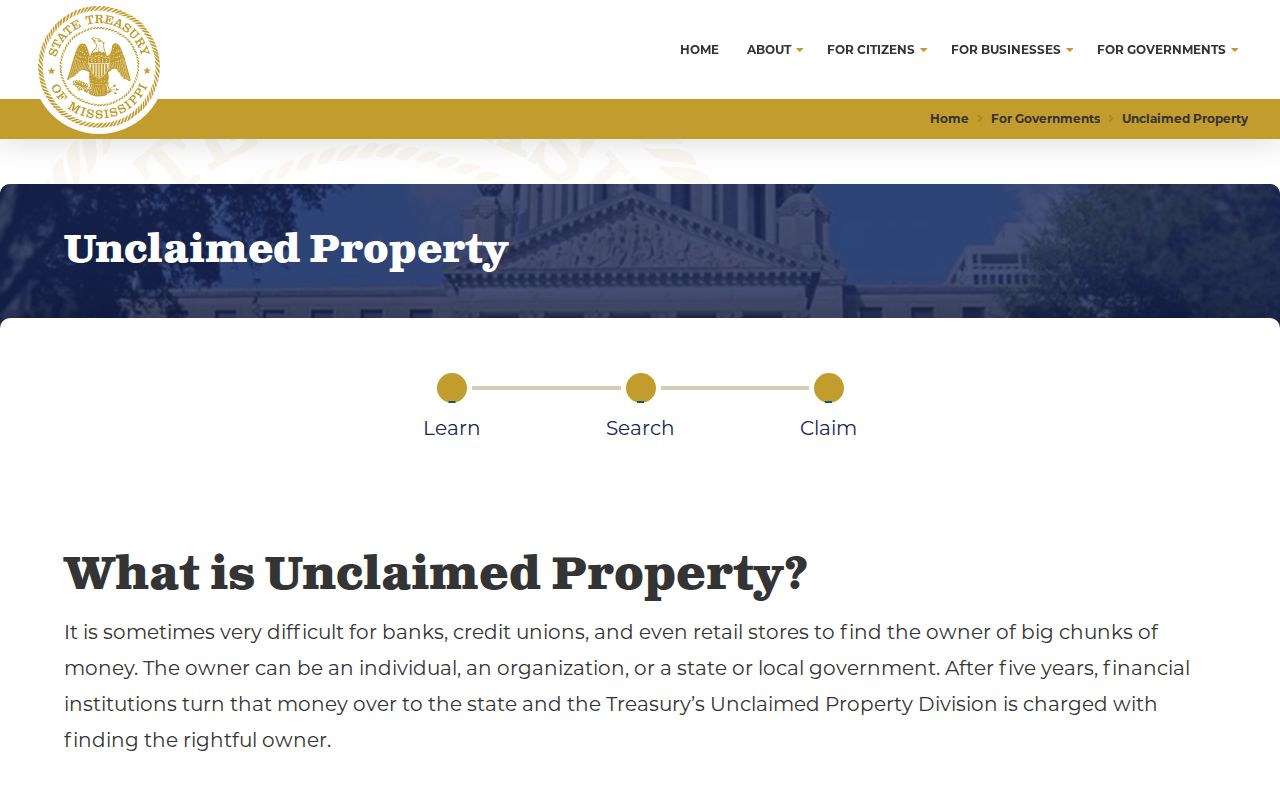
That claim process stays personal and separate. Local property, court, and library records remain the real engines of Gulfport research.
Gulfport Historical Resident Directories
Historical household work in Gulfport starts with dated editions and local shelves. The St. Louis County Library's Mississippi directory guide lists Gulfport runs for 1912-13, 1922-23, 1925, 1931, 1936, 1939, 1947, 1949, 1953, 1954, 1958, and 1960. The guide covers many years. It does not name the publisher for those runs. Confirm the exact edition and reel with HCLS before making a trip.
A city-directory line can support a name for its edition year. It can also support an address, household notation, or occupation field. It cannot establish continuous residence or ownership. The full collection and the method for reading entries belong on the Gulfport city directories page, which keeps the past residents of Gulfport material in one place.
Gulfport Library Dates Matter
The HCLS Local History and Genealogy guide is the fallback when the web runs dry. It catalogs city directories. It also lists the Bradford-O'Keefe Funeral Records index for 1901-1960, cemetery cards, county deed and tax material, and newspaper microfilm. Requests go through in person, phone, email, or mail. Call ahead, because one shared microfilm reader and printer means one-hour turns when others wait.
The Daily Herald run starts in 1888. It has a documented gap from March 1964 through August 1965. A household that vanishes in that window is not gone. Check the South Mississippi Sun, Sun Herald, deeds, directories, or MDAH holdings first. That negative-result rule matters as much as any successful search. It applies to find neighbors in Gulfport across the decades.
Gulfport Privacy Sets the Boundary
Mississippi's Public Records Act does not turn every personal field into an open directory. The law preserves confidentiality created elsewhere and allows redaction. Voter Social Security numbers, birth dates, and similar private data stay out of public view, vital records carry their own eligibility rules, and protected addresses may go through the state's Address Confidentiality Program.
| Official record route | What it can support | What it cannot establish |
|---|---|---|
| Landroll or deed index | Parcel, assessed owner, legal party, and date | Current household occupancy |
| GIS address point | Location and parcel geometry | A person tied to that point |
| Registration or precinct search | Information returned by the official match system | A public release of private input fields |
| Historical directory or newspaper | A time-stamped past entry | A current location |
Gulfport Records Need Dates
Gulfport's search geography has shifted over the years, so dates matter. Harrison County was created in 1841. Mississippi City served as county seat until 1902, when Gulfport took over that role. Street names have changed too. Beach Boulevard was once called 2nd Street. East Railroad and Railroad Street appear in older records as 4th and later 18th. Old street vocabulary can easily explain a missed directory, map, or newspaper result.
Pair the custodian, the date, and the record key whenever you request something. A careful request to Harrison County names a specific record and a date range. It also names a delivery format such as map, electronic, or hardcopy. County policy lays out a seven-working-day response with an estimate. Production follows within 14 days after the estimate is paid. A separate policy passage counts seven working days from payment instead. Ask for the schedule estimate rather than assuming a single deadline applies.
Note: A search log with the source URL, query, date, and book, page, PPIN, or case number makes any Gulfport result reproducible.